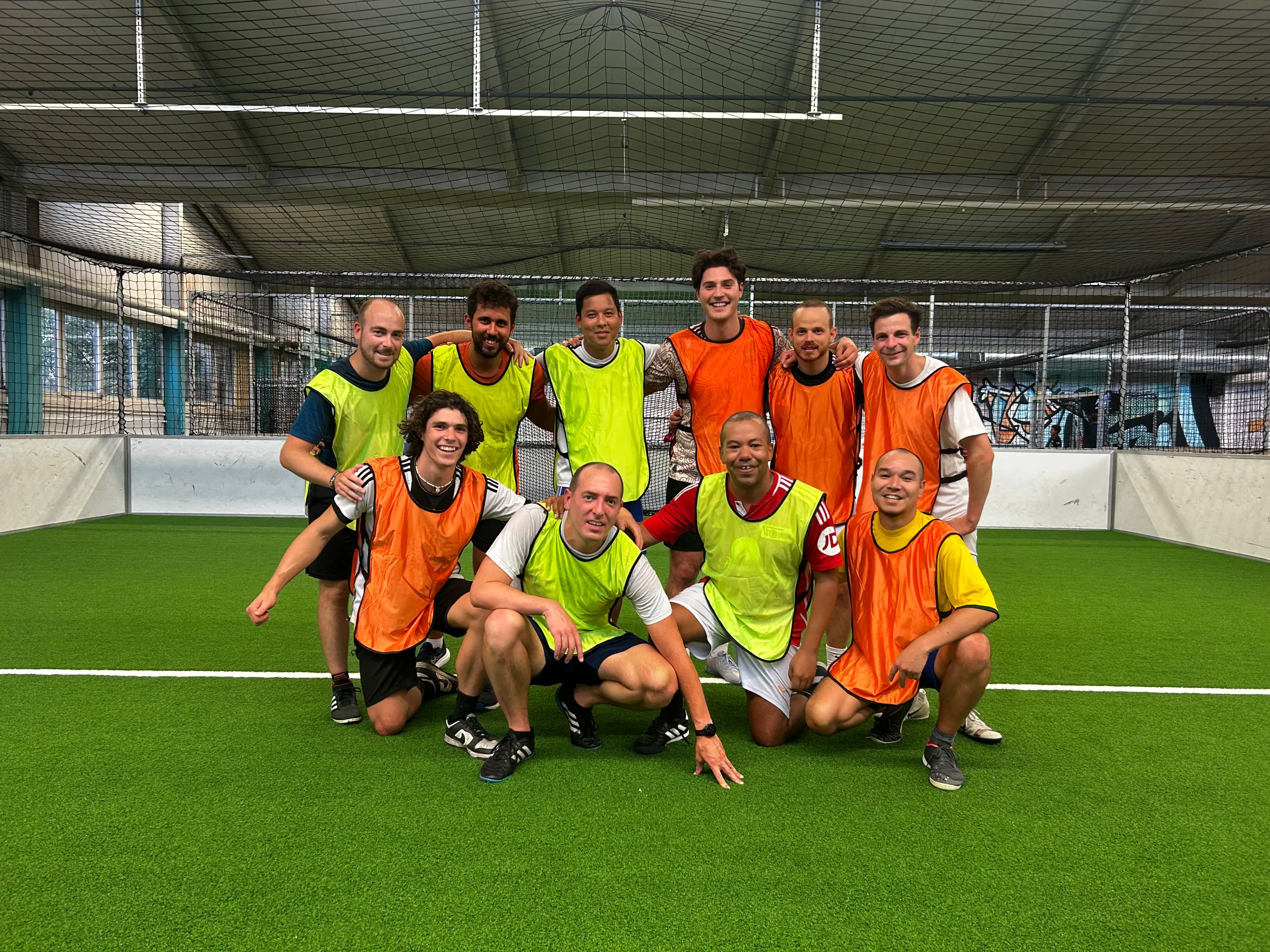
Moving to Zurich can be exciting — and genuinely difficult.
The city is beautiful, efficient, and safe. But it's also notoriously hard to break into socially, especially if you don't speak Swiss German and arrive without an existing network. Many expats describe the same experience: months of working, commuting, and watching the city from the outside, struggling to find genuine connection.
Pickup football has become one of the most reliable solutions to this problem.
The Zurich Social Wall
If you've spent time in Zurich, you'll recognize what long-term expats call "the Zurich social wall." Swiss culture places a high value on privacy, established social groups, and long-term trust-building. Friendships take time. Neighbors don't knock on each other's doors uninvited. Colleagues tend to keep work relationships professional.
This isn't a criticism — it's simply a cultural reality that requires a different approach than building a social life in London, Barcelona, or São Paulo.
The workaround that thousands of expats have found: organized sport creates forced socialization in a format that everyone immediately understands.
On a football pitch, the rules are universal. The culture is international. Language barriers collapse after the first tackle. And you're back every week.
Why Football Works Specifically
There are other ways to meet people in Zurich — language exchange groups, expat meetups, hobby clubs, volunteer work. All of these have value, but football has specific properties that make it particularly effective for social connection:
Immediate shared purpose. From the moment the game starts, you're working together. You're passing to people you've never met before. You're celebrating goals together. You're on the same side, literally.
Physical activity releases tension. The discomfort of meeting strangers dissolves when you're both focused on the ball. You don't have to think about what to say — the game handles the social lubrication for you.
Recurring structure. Unlike a one-off event, pickup football is weekly. You see the same faces repeatedly. Familiarity builds naturally over time without any forced effort. This is how most meaningful friendships actually form — through repeated low-stakes contact.
No language requirement. You can participate fully in a pickup football game with 50 words of English. Football is a universal language in the most literal sense.
Who You'll Meet on the Pitch
The player mix at Striker games in Zurich reflects the city's remarkable international character.
Zurich's expat population is genuinely diverse — finance professionals from across Europe, tech workers from South and Southeast Asia, researchers and PhD students from dozens of countries, and international staff from major organizations based in the city. This mix shows up directly on the football pitch.
In a typical Striker game at Josef Sportzentrum on a Wednesday evening, you might find:
- A software engineer from India who moved to Zurich six months ago for a fintech job
- A Swiss-German player who's played pickup football for three years and now brings his friends from work
- A French postdoc finishing a research year at ETH Zürich
- A Brazilian player who works at a major bank in the financial district
- A marketing manager from the UK who found the game through a colleague's recommendation
- A Spanish teacher who plays weekly as a break from classroom hours
English is the default language on and around the pitch. But conversations in the margins often jump languages — Spanish between South American players, French in one corner, Italian in another.
District by District: Where Players Come From
Zurich's geography shapes the player mix at different venues.
Kreis 4 and 5 (Langstrasse, Industrie): The most international mix. Young professionals, startup workers, tech sector employees. Games here tend to be energetic and socially open. This is where you're most likely to meet someone in a similar situation to yours.
Kreis 6 and 7 (Oberstrass, Fluntern, Universitätsviertel): Strong university influence. ETH and UZH students and researchers make up a large proportion. Games skew slightly younger and more diverse academically. Good for connecting with the research and academic community.
Kreis 8 (Riesbach, Seefeld): More mixed — local Swiss players alongside expats from the finance sector. A slightly more established social crowd, though still very open to newcomers.
Wollishofen and Sihlcity (Kreis 2 and 3): More residential, slightly older demographic. Good for expats living on the south side of the city who want a local game rather than commuting to Kreis 5.
The Language Dynamic
One thing that surprises many new players is how the language situation unfolds.
In Swiss German-speaking social contexts, expats often feel excluded even if they speak High German — Swiss German is genuinely different and takes years to understand fully. English is spoken widely but isn't always the default in casual social settings.
On the football pitch, this reverses. English becomes the natural lingua franca because it's the only language guaranteed to be shared across nationalities. Swiss players switch to English without being asked, and the international players feel immediately included.
This makes the football pitch a social equalizer that other venues in Zurich simply aren't. A drinks evening at a Swiss friend's house can leave non-German speakers on the periphery. A football game puts everyone on exactly the same footing from the first minute.
Seasonal Patterns and What to Expect
Zurich's weather is a factor. Here's how the pickup football year typically plays out:
Spring (March–May): The season starts to build momentum. Games that ran through winter indoors move back outside. New players join more frequently as the evenings get lighter. Attendance is high and the atmosphere is celebratory — everyone is happy to be outside again.
Summer (June–August): Peak season. Games run late into warm evenings. The social element expands — post-game groups often head to the Zurihorns or a nearby Beiz for a drink. This is when friendships that started on the pitch move into the rest of life.
Autumn (September–November): Still strong, but attendance begins to vary week by week. Players who are regulars stay committed. The mood becomes slightly more serious — people are back to full work schedules and appreciate the reliable weekly ritual even more.
Winter (December–February): The test of commitment. Games continue, often moving to indoor venues. The crowd is smaller but more dedicated. Players who stick through winter form stronger bonds than those who disappear in October and return in April.
If you're new to Zurich and arrive in winter, don't let the cold stop you. Winter games are some of the most communal because the smaller group creates faster familiarity.
Beyond the Pitch: How Football Opens Other Doors
The social benefits of pickup football extend well beyond the 60-minute game.
WhatsApp groups and informal organizing. After a few games, organizers and regulars often invite players into group chats. These groups become a thread for the broader community — sharing game updates, organizing additional activities, and staying in touch between games.
Champions League and major tournaments. A common pattern in expat football communities is watching major matches together. Players who met on the pitch end up watching Champions League knockout matches at someone's apartment or a local bar. Football creates a shared cultural reference that extends into other social settings.
Other activities. Players who connect through football often discover they have other interests in common. Hiking trips in the Alps on weekends. Ski days in winter. Flatshare advice and restaurant recommendations. The social network that starts on the pitch spreads naturally.
Professional connections. Zurich is small enough that the professional and social worlds overlap significantly. Several Striker regulars have noted meeting someone on the pitch who later turned out to be a valuable professional contact. This isn't the purpose of pickup football, but it's a genuine side effect of building a diverse social network in a small city.
The Fastest Way to Break Through the Zurich Social Wall
If you're new to Zurich and looking for the fastest path to a genuine social life, the evidence from thousands of expats who've made this city their home points in the same direction:
Regular participation in a physical activity that has inherent social structure.
Pickup football checks every box. It's weekly. It's physically engaging. It attracts a genuinely international crowd. It forces you to interact with new people every session. And it gives you a repeated context — the same venue, the same time, the same format — that allows familiarity to grow naturally.
The players who get the most out of the Striker community in Zurich are the ones who show up consistently. Not necessarily every week, but regularly enough that other players begin to recognize them, learn their names, and start to see them as part of the group.
That process of becoming a regular takes roughly 4–6 sessions. After that, you're no longer a stranger. You're part of the team.
How to Get Started
The Striker app makes it easy to find and join your first game:
- Download the app
- Browse available games in Zurich by date, location, and skill level
- Check how many spots remain and who's already signed up
- Reserve your spot and add the game to your calendar
- Show up, play, and stay to chat afterward
The first game is always the hardest. But it's also the beginning of something that — for many players — becomes one of the highlights of their week in Zurich.
Final Thoughts
For expats arriving in Zurich, football is more than a sport.
It's a way to break through a city that doesn't always make itself easy to enter. It's a community that welcomes you without asking for your credentials. It's a weekly structure in a city where structure is the norm, but genuine social spontaneity is rare.
All it takes is showing up to the pitch and kicking the ball.