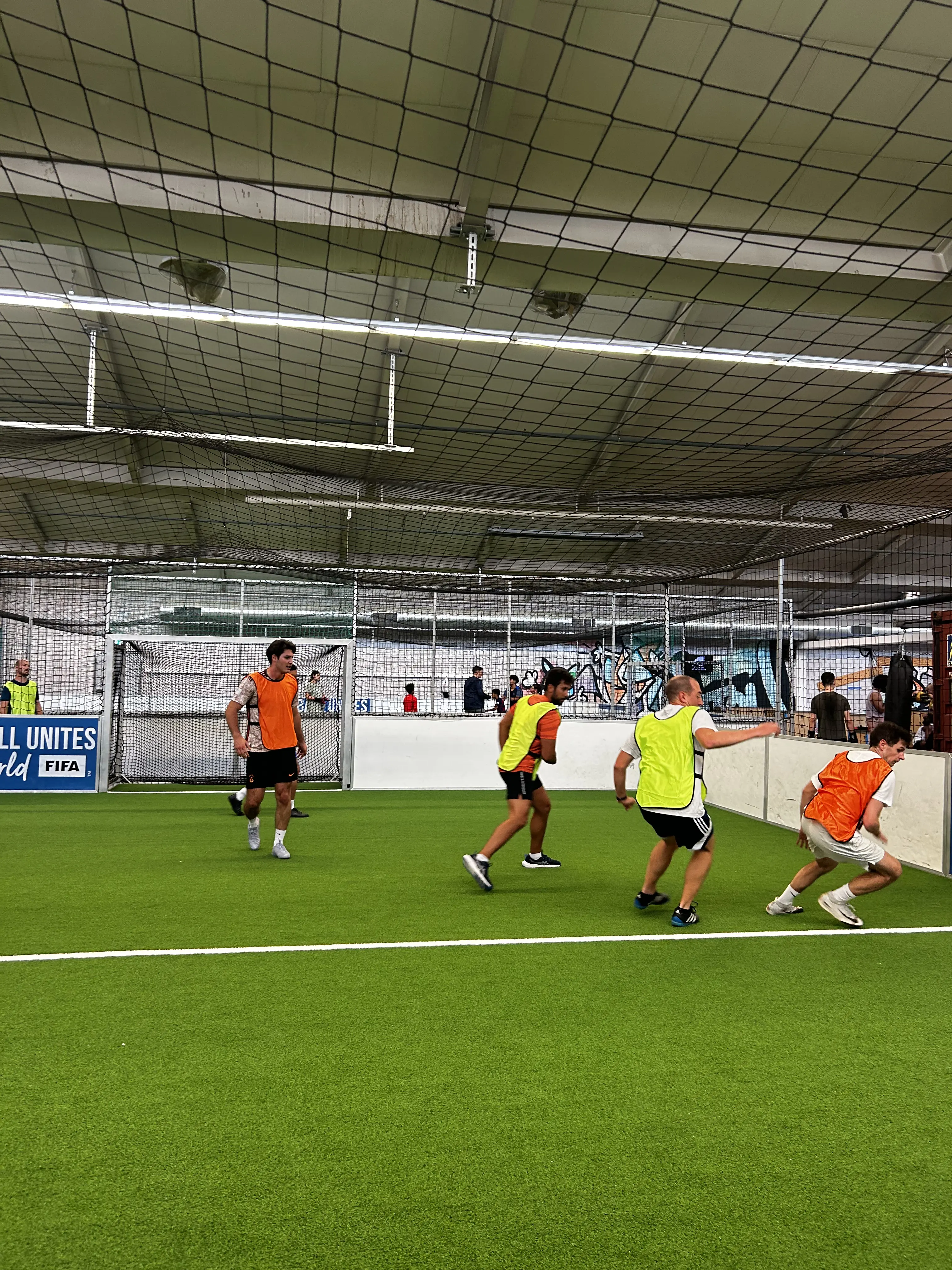
If you've never played pickup football before, you might wonder what the experience is actually like.
Is it competitive? Are people friendly? What do you wear? What happens if you're not that good? Where do you even go?
Many people moving to Zurich want to stay active, meet new people, and do something genuinely enjoyable after work — but don't want the commitment of joining a football club. Pickup football is the answer. But for first-timers, the format can feel unfamiliar.
Here's a complete, honest walkthrough of exactly what happens when you join your first pickup football game in Zurich through Striker.
Before the Game: Finding Your First Match
The process starts in the Striker app. Open it, and you'll see a list of all upcoming pickup football games in Zurich and nearby cities, organized by date.
Each game listing shows you:
- The venue name and address — with directions and a map
- The date and kickoff time
- The price — most games are between CHF 10–20 per player
- Available spots — how many places remain out of the total
- Skill level — most Striker games welcome all levels, but some are specifically for intermediate or experienced players
- Who's already signed up — you can see how many players are coming
Booking is simple: tap the game, pay the entry fee through the app, and you're confirmed. The app sends you a confirmation with all the details you need.
Which game should you pick for your first time?
Look for games labeled "all levels" or "beginner friendly." Games at Josef Sportzentrum in Kreis 5 are consistently popular and well-organized, making them good choices for a first experience. Weekday evening games (Monday, Wednesday, Thursday) tend to be the most active.
Aim for a game with at least 8–10 players already signed up — these are the sessions where the format flows best and the atmosphere is most social.
What to Bring
First-timers often overthink this. The list is short:
Essential:
- Turf shoes or indoor shoes — this is the most important item. If the game is outdoors on artificial turf, wear turf shoes (small rubber moulded studs). If it's an indoor court, wear indoor football shoes or non-marking court shoes. Regular sneakers work in a pinch but significantly affect your performance and grip.
- Sports kit — shorts, a t-shirt or training top, and shin guards. Most venues don't require shin guards for pickup games, but they're worth wearing if you have them.
- Water bottle — a full one. 60 minutes of 4v4 is surprisingly demanding. There are usually water fountains at venues, but having your own bottle saves you from hunting for one mid-game.
- Charged phone — for showing your booking confirmation to the organizer on arrival
Optional but useful:
- Bibs will be provided by the organizer. You don't need to bring your own.
- A light jacket or hoodie for warming up before the game. Pitches in Zurich can be cool in the evenings even in late spring.
Leave at home:
- Football boots with long FG blades or metal studs — these are prohibited on artificial turf and will get you asked to change or sit out.
Arriving at the Pitch: What to Expect in the First Five Minutes
Get there 10 minutes early.
This is the standard expectation in the pickup football community, and it matters. The organizer uses those 10 minutes before kickoff to check everyone in, form balanced teams, and explain the format. Arriving late disrupts this process for everyone.
When you arrive at the pitch, look for the person with the bibs — that's the organizer. Introduce yourself, show your booking confirmation in the app, and they'll check you off the list.
First impressions of the venue:
Most Striker games in Zurich happen on enclosed cage pitches or indoor courts. The pitches are smaller than a full football field — typically 20–40 metres long depending on the format. This is intentional. Small pitches create fast, intense, constantly engaging football. You're involved in every phase of the game.
At Josef Sportzentrum — one of the most popular venues — you'll find an enclosed cage pitch with excellent artificial turf. The cage means the ball never leaves play. The surface is consistent and grippy. The pitch is well-lit for evening games. It's exactly what pickup football should be.
The vibe in those first minutes:
Players are usually warming up individually or in pairs. Some will be doing ball work, others stretching, others chatting with people they already know. As a new face, you'll notice a few people glance your way with a nod. This is the universal signal: welcome.
Don't stand on the edge waiting to be introduced. Walk over to a group of players and say hello. Ask how long they've been coming. Something as simple as "Is this your first time?" or "Do you come here regularly?" is enough to start a conversation. Most players are immediately friendly — they remember their first game.
The Organizer's Briefing
A few minutes before kickoff, the organizer will gather everyone and run through the format. Pay attention — this is where everything is explained.
A typical briefing covers:
Team allocation: The organizer forms teams based on experience and numbers. For a 4v4v4 format with 12 players, you'll have three teams of four. For a 5v5 format with 10 players, two teams of five. The organizer tries to balance the teams so no one side dominates.
Game format: For three-team rotation formats, the rules are:
- Two teams play while one rests
- Games last 5–7 minutes per match
- The winning team stays on the pitch and plays the team that was resting
- The losing team rests while the winners play again This creates a natural competitive structure with real stakes for each mini-match.
Contact level: Most Striker games emphasize "competitive but clean" play. Strong shoulder challenges are generally fine. Reckless tackles from behind or aggressive aerial challenges are not welcome. The organizer will say this explicitly.
Bibs: The organizer hands out colored bibs. If you're in one team, you wear the bib for the whole game. This sounds obvious but in 4v4 cage games, it's easy to lose track of who's on whose team without them.
The First Rotation: Your First Minutes on the Pitch
The first time the whistle blows and you're on the pitch, the experience is immediate and all-consuming.
Small pitches = constant involvement. In an 11-a-side game, a quiet midfielder might go two or three minutes without touching the ball. In 4v4, you're involved every 15–20 seconds. There's no hiding and no downtime. This is simultaneously the most demanding and most enjoyable aspect of the format.
Intensity. First-timers are consistently surprised by how physically demanding 4v4 is. The constant short-distance sprinting, directional changes, and defensive pressing add up fast. You will be tired by the end of the first rotation if you go at full intensity. This is normal. Pace yourself if you need to.
Your teammates. In the first rotation, you'll be playing with three people you've never met before. Don't overthink the tactics. Play simply, keep the ball moving, make yourself available for passes. The more you try to do individually in an unfamiliar system, the more you lose the ball. Play within the team's rhythm and your role will become clear naturally.
Errors. You will make errors. Everyone does. In pickup football, nobody cares — next touch, next moment. The culture around errors is one of the most refreshing things about the format. There's no coach on the sideline shouting. Nobody keeps individual stats. A miscontrol is forgotten the moment the ball is played again.
The Rotation Between Matches
When the whistle blows to end a match, the rotation happens quickly.
If your team lost, you rest. Walk to the side, catch your breath, drink some water. Watch the two teams on the pitch and start to understand their patterns. Who are the strongest players? What's the tempo? This rest period is also a natural social moment — you're standing next to the opposing team's resting players, and conversations start easily.
If your team won, you stay on. The other team rotates off, a fresh team comes on, and the organizer signals the new match.
Between rotations, talk. Ask someone how they thought the match went. Comment on a good play you saw. This is not forced small talk — it's genuine shared experience, fresh from the pitch. These conversations are where friendships start.
The Atmosphere Throughout
The atmosphere at a well-run Striker game is hard to describe to someone who hasn't experienced it.
It's competitive enough to be genuinely exciting. When your team wins a tight 5-minute match, there's real satisfaction. When you score a goal — even in a casual pickup game — the feeling is authentic.
But it's social in a way that competitive sport rarely achieves. You're playing with, and against, people from completely different backgrounds. A banker on one team, a postdoc researcher on the other, a chef who finished his shift early, a product manager who just moved to Zurich from London. Football puts them all on exactly the same footing.
Zurich is a city where professional credentials are important in social contexts. On the pitch, they're completely irrelevant. This is part of why so many players come back week after week.
After the Final Whistle
The session usually ends after 60 minutes, with a final rotation announced by the organizer. When the last whistle blows, the structure ends and the social phase begins.
Don't immediately grab your bag and leave.
Stay for at least 5 minutes. This is when the best conversations happen. Players are naturally relaxed after a good workout, the competitive edge has softened, and the shared experience creates an easy foundation for talking.
Common post-game rituals:
- Informal chat at the pitch — usually 5–10 minutes of players rehashing good moments, sharing opinions on the format, asking who's coming next week
- Exchanging contacts — "Hey, are you on the app? I'll see you at the next one" is a common phrase. Many players end up adding each other on Instagram or WhatsApp after a few sessions
- Post-game drinks — not every session, but it happens regularly, especially in summer. Players will often mention heading to a nearby bar or the Zurich lakeside. If you're invited, go
What to Expect After Your First Game
After your first game, you'll likely feel:
- Physically tired — good tired, the kind that comes from genuine exertion
- Socially energized — you've talked to more new people in 60 minutes than in a typical week of Zurich office life
- Slightly disoriented — the format is new, the faces are new, and you probably spent some of the game figuring out the rotation system
And you'll probably want to come back.
The second game is easier. You know the format, you recognize some faces, and your body is starting to adapt to the intensity. By the third or fourth game, you're a familiar face to the regulars. By the sixth or seventh, you're part of the community.
That's the trajectory for most players. It starts as "let's try this once" and becomes a fixture in the weekly calendar.
Frequently Asked Questions from First-Timers
Do I need to be good at football? No. Most games welcome all skill levels. The format is designed to work across a range of abilities because the small pitch and fast rotation naturally level the playing field.
What if I come alone? The vast majority of players come alone, at least for the first few sessions. This is completely normal and expected. The game format handles the social introduction for you.
What if I'm not fit enough? You don't need to be an athlete. Come as you are and pace yourself. Pickup football is more cardiovascularly demanding than most people expect, but the rotation format means you get rest between matches.
How much does it cost? Most Striker games cost between CHF 10–20 per session. Payment is through the app when you book.
Can I cancel if something comes up? Yes. Check the cancellation policy in the app for each game — most allow cancellation up to 24 hours before kickoff.
Ready for Your First Game?
The best way to understand pickup football in Zurich is to experience it. Everything in this guide makes much more sense once you've been on the pitch.
Browse all upcoming games in Zurich through the Striker app, find one that fits your schedule and location, and book your spot.
The first 10 minutes are the hardest. Everything after that is pure football.