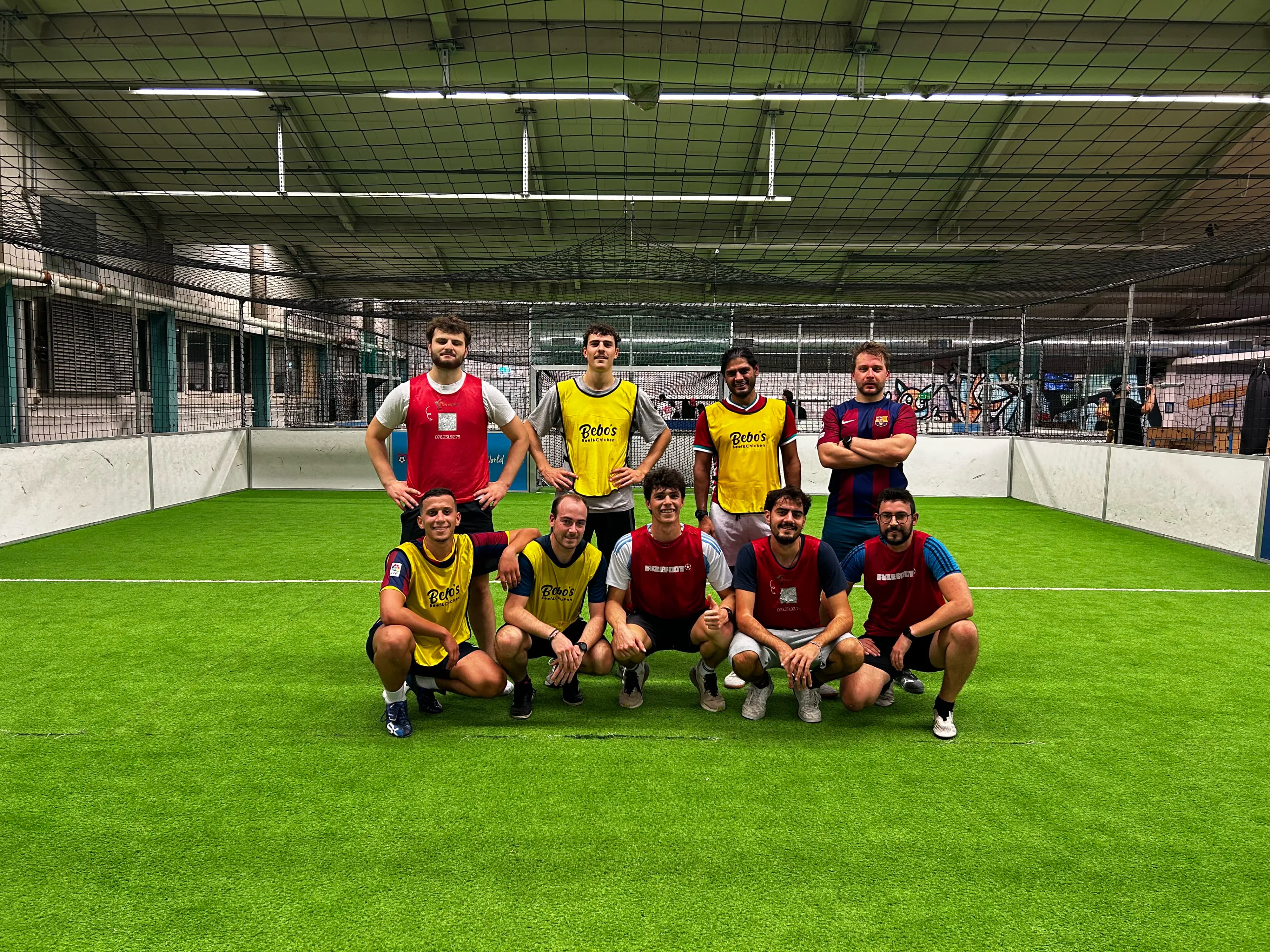
Walk past any indoor sports centre in Zurich on a Tuesday evening and you'll hear it before you see it — the thud of a ball, the echo of boots on artificial turf, shouts in four different languages. Pickup football in Zurich is having a moment. The number of informal games has grown steadily over the past few years, and the players showing up are more diverse than ever.
This isn't happening by accident. Several things have converged at the same time to make casual, flexible football more appealing than traditional club football — and Zurich happens to be a city where all of them apply at once.
A City Built on Expats
Zurich is one of the most international cities in Europe. Around a third of its population are foreign nationals, drawn by the finance sector, ETH Zurich, major pharmaceutical and tech companies, and the broader appeal of a well-run, central European city. People arrive from Germany, France, the UK, Spain, Portugal, Brazil, the United States, India — from everywhere football is played, which is to say everywhere.
For most of them, football is not just a sport. It's a reference point. It's the thing they did in school, with their university friends, in their home city on Sunday mornings. It's familiar when everything else is new.
And Zurich, despite its size, has historically not made it easy for newcomers to find a game. Traditional Swiss football clubs are welcoming, but they require a level of commitment — registration, fixed training nights, season-long participation — that doesn't fit the reality of someone who has just moved countries, is still finding their feet, and has no idea whether they'll still be in the same apartment in eighteen months.
Pickup football solves this. No registration. No obligation. No German required. You download an app, find a game that fits your evening, and show up. You meet people. You play. That's it.
For Zurich's expat community, that accessibility is everything. It's why a disproportionate share of Striker's players in Zurich are internationals — people who love football, want to keep playing, and needed a way in that didn't involve navigating a Swiss football association registration form in their second language.
The Flexible Lifestyle Shift
Something changed in how people in their twenties and thirties relate to commitment. It's not that they're less serious — it's that their lives are less predictable.
The typical Striker player in Zurich is somewhere between 25 and 40. They have a demanding job. They travel for work. They have a social life, a relationship, maybe young children. Their schedule changes week to week. The idea of blocking out every Wednesday evening for the next eight months for a club training session doesn't fit — not because they don't want to play football, but because life doesn't work like that anymore.
Pickup football matches this reality. You browse games for next week and pick the one that works. If something comes up, you cancel. If you want to play twice in one week, you book twice. If you're travelling for two weeks, you simply don't play. There's no coach expecting you at training, no teammates counting on you for a fixed lineup.
This shift toward flexibility isn't unique to football. It mirrors what's happened across fitness, travel, food, and entertainment — subscription models replacing ownership, on-demand replacing scheduled. Football was slower to follow, partly because the social infrastructure of clubs made the traditional model sticky. Pickup football platforms have changed that.
In Zurich specifically, this trend is amplified by the city's demographics. A high concentration of professionals with mobile careers, internationals on assignment, and young people in a transitional phase of life creates exactly the audience that pickup football is designed for.
The Rise of Small-Sided Football
There's a third factor that often goes unnoticed but matters enormously: the format itself has gotten better.
Traditional 11-a-side football is hard to organise casually. You need 22 players, a full-sized pitch, and a functioning referee. Getting all of that together for a one-off game is a logistical challenge that most people don't want to deal with. The result is that 11-a-side stays in clubs, because clubs are the only structures that can sustain the organisational overhead.
Small-sided football — 4v4, 5v5, 6v6 — is a fundamentally different game. It needs fewer players, smaller pitches, and no referee. It's faster, more technical, and in many ways more enjoyable for recreational players who want touches on the ball rather than long stretches of running in wide positions. Goals come more often. Everyone is involved.
In Zurich, this format has become the standard for pickup football. Most Striker games run as 4v4v4 (three rotating teams), 5v5, or 6v6. On larger outdoor pitches in summer, 8v8 is common. The formats are adapted to the venues — indoor halls in Industriequartier and the city centre, outdoor pitches that open up through spring and summer — and to the player counts that are realistic to organise at short notice.
The growing cultural acceptance of small-sided football also matters. A generation raised on futsal and five-a-side has grown up treating these formats as real football, not a compromise. Watching the success of formats like Kings League and street football competitions internationally has reinforced this. Small-sided football is no longer seen as something you do when you can't get eleven. It's something you choose.
What This Means for Zurich
Put these three trends together — an international population hungry for accessible football, professionals who can't commit to fixed schedules, and a format shift toward small-sided games — and the growth of pickup football in Zurich starts to feel inevitable.
The city has the demand. It has the venues. It has the demographic. What it lacked for a long time was the infrastructure to connect players with games efficiently and reliably.
Striker exists to be that infrastructure. Games listed openly, sign-ups handled in the app, payments sorted before the day, team sizes balanced automatically. The community is already there. The platform just makes it findable.
If you've been meaning to find a game in Zurich, now is a good time to start.
Frequently Asked Questions
Why is pickup football popular in Zurich specifically? Zurich's large expat population, high concentration of young professionals with flexible schedules, and well-maintained indoor and outdoor sports facilities make it ideal for pickup football. The city has strong demand but historically poor access — pickup platforms have filled that gap.
Is pickup football only for expats in Zurich? Not at all. While expats make up a significant share of Striker's player base, Swiss players are well represented too. The appeal of no-commitment, flexible football crosses national backgrounds.
What formats are most common in Zurich pickup football? 4v4v4, 5v5, and 6v6 are the most common formats. On larger outdoor pitches in summer, 8v8 games also run. Indoor venues run year-round; outdoor pitches are primarily spring and summer.
How much does pickup football cost in Zurich? Between CHF 5 and CHF 8 per player per session on Striker. This covers your share of the pitch booking — no membership fees or registration costs.
Where do most pickup football games happen in Zurich? Games are spread across the city, with a concentration in Industriequartier (Zürich 5) and the city centre. Josef Sportzentrum is one of the most active community venues on the platform.